Forest Agriculture: a lifeline for Haïti
Forest agriculture: a development and survival effort for the Haitian people and their environment
The nefast heritage of colonialism
When Christopher Columbus landed on the island of Haiti on December 6, 1942, he was struck by its greenery and its resemblance to Spain. The adventurer named the island Ispagnola for this reason. In the language of nearly a million Native Americans—called Arawaks—who populated the five chiefdoms that ruled the island long before the European invasion, Ayiti, Quisqueya, or Boyo, depending on the name chosen, meant High Land or Mountainous Land.
This island, bathed by the Caribbean Sea, quickly became known for its lush tropical forest. The Spanish invaders showed no mercy to the Arawaks, who were enslaved and died by the thousands in the gold mines of Cibao and elsewhere on the island. To replace the Arawaks, who also perished in wars under the hooves of Spanish horses and guns, blacks were brought from Africa to be enslaved as part of the triangular trade. The systematic cutting of precious woods such as cedar and mahogany intensified with the arrival of French adventurers who eventually wrested the western third of the island from the Spanish, today’s Republic of Haiti, under pressure from buccaneers and pirates. The division of the island into two colonies, one Spanish and the other French, was sealed in 1697 by the Treaty of Ryswick in England.
To establish the richest colony, the French introduced the cultivation of sugar cane, which was as valuable as oil and rare earths are today. The French colony required the cutting down of trees to plant sugar cane, coffee, and indigo. It is important to note that the precious woods of Haiti’s forests were exported to Spain and France, not to mention England, which also made incursions on the country’s coasts to take its share of the “colonial pie.”
Chronical Deforestation
The destruction of other trees, such as logwood, further exacerbated the systematic deforestation of Haiti’s hills. African slaves had only a small piece of land, given to them by their masters, to feed their families. The method of agriculture, which is still prevalent today, consisted of cutting down trees to make charcoal before farming. Charcoal is still the most widely used energy source in Haitian households today. Thus, farmers destroy trees to make charcoal to buy rice from the United States. The money from charcoal is also used for everything in a country without an energy or economic policy: feeding one’s family, paying for one’s wife’s childbirth expenses, or paying for a child’s school fees. Haiti has become a desert. Statistics vary between 2% and 30% vegetation cover; what is certain is that no government measures are in place to stop this environmental hemorrhage that is killing the country.
In Legros, for example, the birds have disappeared or migrated to the Dominican Republic; there are no more grains or trees. There is not a single domestic animal; how can you feed a dog when you cannot feed your child?
It is painful to see the image of Haiti from the plane: a mass of yellow earth and equally yellowish coastlines. The contrast is striking when compared to the coastlines of the Dominican Republic or Cuba. Due to deforestation, arable land and alluvial deposits are leaving the slopes of our hills and flowing into rivers and the sea. Fish are moving to deeper waters because the coastlines are filled with soil and alluvial deposits from the denuded hills.
Forest Agriculture : A Crefis’ response
That is why Crefis prioritizes reforestation. It is imperative to stop cutting down trees and making charcoal. In Haiti’s current situation, cutting down a tree is like cutting off your toes, uprooting yourself.
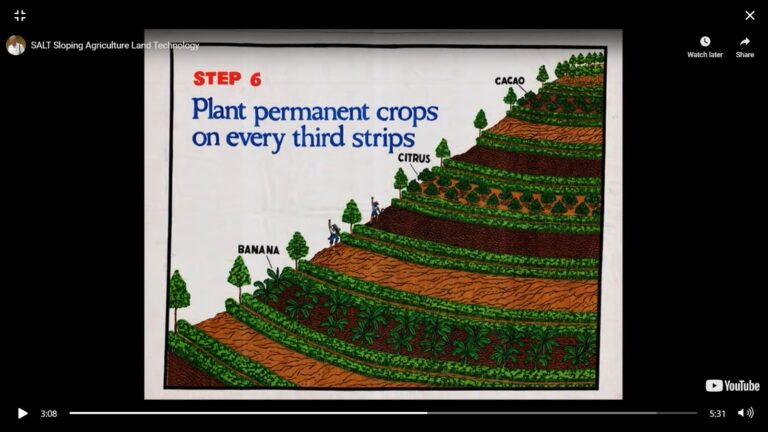
Crefis therefore promotes terrace farming or wooded farming to make agriculture more ecological. An ecological model farm will therefore be built as a pilot project for the development and survival of the Haitian people and their environment.